
Provenance Humana
An ongoing inquiry into inheritance and partial evidence.
3. Castros and Bistros
After my marital separation in 2003, and after the collapse of JamTunz, I returned to music in the most immediate way available to me.
JamTunz had been my interactive music video game engine: a project of real invention, patented ambition, and, in the end, suffocating pressure. Its financial and emotional consequences cost me my marriage and the loss of my home. There are cleaner ways to say that, perhaps, but not truer ones.
So I began again, though not yet with any great philosophy attached to it. Classical guitar-inspired, chacarera-blended acoustic folk songs in bistros and restaurants around southern Ontario. Night after night, room after room. It became a full-time job for years, and in some ways a counterlife to my work in technology and multimedia. Perhaps it was also a rehearsal for the kind of life I still imagine ahead: smaller, more direct, and better suited to my own temperament.
That period did not feel like artistry, really. It was literal survival.
But performing those songs repeatedly led me back into the cultural and historical ground underneath the music. Spain. The Celtic northwest. Castro cultures. Old settlement patterns. Academic papers from Madrid, Oviedo, Lugo, Santiago de Compostela. The songs opened into places, and the places opened into older questions.
Eventually I dug deeply enough that the material began to ask for form. So I put my multimedia abilities back to use and developed a plan for a hybrid interactive documentary that might bring that Iron Age world to life in a serious way.
Telefilm Canada gave me a development grant. In the summer of 2007, I travelled to Spain for two months to finally meet and interview the scientists, archaeologists, and historians working in those fields. The trip took me through places I had read about and imagined, but had not yet properly entered. The results were surprisingly generous: long recorded video interviews, access to archaeological sites, geological and archaeological datasets, even historical reenactment production teams.
I remember feeling that my interest, niche as it was, had been met with respect. A Canadian with Galician roots asking questions in a field that was not fashionable or obvious, but somehow very much mine. They all granted me that.
And then Tosende.
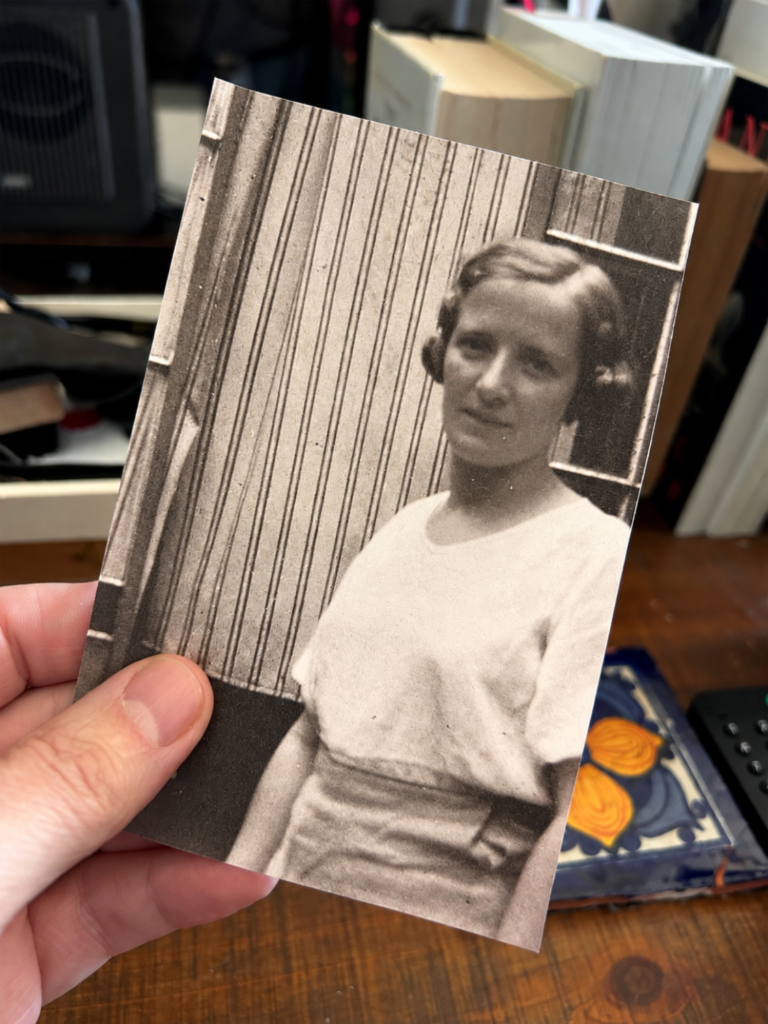
When I visited the village where my grandmother Carmen had been born, I met an elderly woman walking the narrow cobblestone streets who assured me that she remembered her precisely. Carmen as a schoolgirl, before she sailed to the Americas.
That sentence still does something to me.
Because the truth is that my grandmother never really went back to school after emigrating to Uruguay. Her responsibilities were immediate. Her family’s immigrant circumstances were precarious. Childhood gave way to necessity.
But in Tosende, in that woman’s memory, she was still a schoolgirl.
This is the kind of thing I want to gather here.
Not necessarily to make a case for anything. More to understand the humanity around it: the people, failures, silences, landscapes, and delayed recognitions that accumulated long before I knew how to name them. They already knew who I was, in a sense. Not by name, exactly, but by gravity and association.
Years later, during one of my quiet returns to Asturias, I was shown a rural estate long abandoned. The roof had collapsed. Vines pushed through the windows. The stone walls leaned, unsure of the century they still stood in. I imagined replanting the terraces, letting the broken walls shelter what might still continue, using the same soil, the same shapes, the same old materials.
The local builder who walked the land with me was reserved and deliberate. We spoke of masonry, drainage, patience. Later, when I told him something of my family’s leaving a century before, my life between languages and continents, and my strange sense of return, he paused and said something I have carried ever since:
“A hundred years isn’t that long, around these parts.”
At first I thought he meant the house. But I understood later that he meant the memory that continues in land and people, whether or not we choose to listen.
Contrapunto castellano
Después de mi separación matrimonial en 2003, y después del derrumbe de JamTunz, volví a la música de la manera más inmediata que tenía a mano.
JamTunz había sido mi motor interactivo para videojuegos musicales: un proyecto de invención real, de ambición patentada y, al final, de una presión asfixiante. Sus consecuencias económicas y emocionales me costaron el matrimonio y la pérdida de mi casa. Hay maneras más limpias de decirlo, quizá, pero no más verdaderas.
Así que empecé de nuevo, aunque todavía sin atribuirle ninguna gran filosofía. Canciones acústicas de raíz clásica, mezcladas con algo de chacarera, tocadas en bistrós y restaurantes del sur de Ontario. Noche tras noche, sala tras sala. Durante años se convirtió en un trabajo de tiempo completo y, en cierto modo, en una contravida frente a mis años de tecnología y multimedia. Quizá también fue un ensayo de la vida que todavía imagino por delante: más pequeña, más directa, y más acorde con mi propio temperamento.
Aquel período no se sentía como arte, realmente. Era supervivencia literal.
Pero tocar aquellas canciones una y otra vez me fue devolviendo al suelo cultural e histórico que había debajo de la música. España. El noroeste celta. Las culturas castreñas. Los antiguos patrones de asentamiento. Artículos académicos de Madrid, Oviedo, Lugo, Santiago de Compostela. Las canciones se abrieron hacia lugares, y los lugares hacia preguntas más antiguas.
Llegué a profundizar lo suficiente como para que aquel material empezara a pedir forma. Así que volví a poner mis capacidades multimedia al servicio de una idea: un documental interactivo híbrido que pudiera dar vida a aquel mundo de la Edad del Hierro de una manera seria.
Telefilm Canada me concedió una beca de desarrollo. En el verano de 2007 viajé a España durante dos meses para conocer y entrevistar, por fin, a los científicos, arqueólogos e historiadores que trabajaban en esos campos. El viaje me llevó por lugares que había leído e imaginado, pero en los que aún no había entrado del todo. Los resultados fueron sorprendentemente generosos: largas entrevistas grabadas en vídeo, acceso a yacimientos arqueológicos, datos geológicos y arqueológicos, incluso equipos de recreación histórica.
Recuerdo haber sentido que mi interés, por específico que fuera, había sido recibido con respeto. Un canadiense con raíces gallegas haciendo preguntas en un campo que no era especialmente de moda ni evidente, pero que de algún modo ya era muy mío. Todos ellos me concedieron eso.
Y luego Tosende.
Cuando visité la aldea donde había nacido mi abuela Carmen, me encontré con una mujer mayor caminando por las estrechas calles empedradas. Me aseguró que la recordaba con precisión. Carmen como una niña de escuela, antes de cruzar el Atlántico hacia las Américas.
Esa frase todavía me toca algo.
Porque la verdad es que mi abuela nunca volvió realmente a la escuela después de emigrar a Uruguay. Sus responsabilidades fueron inmediatas. Las circunstancias inmigrantes de su familia eran precarias. La infancia cedió ante la necesidad.
Pero en Tosende, en la memoria de aquella mujer, seguía siendo una niña de escuela.
Esto es lo que quiero reunir aquí.
No necesariamente para defender nada. Más bien para comprender la humanidad alrededor de todo esto: las personas, los fracasos, los silencios, los paisajes y los reconocimientos tardíos que se habían ido acumulando mucho antes de que yo supiera nombrarlos. Ellos ya sabían quién era yo, en cierto sentido. No por mi nombre, exactamente, sino por gravedad y asociación.
Años después, durante uno de mis regresos silenciosos a Asturias, me mostraron una finca rural abandonada. El tejado se había venido abajo. Las vides empujaban por las ventanas. Los muros de piedra se inclinaban, inseguros del siglo en que todavía seguían en pie. Imaginé volver a plantar las terrazas, dejar que los muros rotos protegieran aquello que aún pudiera continuar, usando la misma tierra, las mismas formas, los mismos materiales antiguos.
El constructor local que caminó la finca conmigo era reservado y deliberado. Hablamos de mampostería, drenaje, paciencia. Más tarde, cuando le conté algo de la partida de mi familia un siglo antes, de mi vida entre lenguas y continentes, y de mi extraño sentido de regreso, hizo una pausa y dijo algo que he llevado conmigo desde entonces:
«Cien años no es tanto, por estas tierras».
Al principio pensé que hablaba de la casa. Pero después entendí que hablaba de la memoria que continúa en la tierra y en la gente, escuchemos o no.
I had an aunt that was raised in Baltar very close to Tosende. What a beautiful place.
It really is. I look forward to returning there again.
Personal stories. Is this part of your diary?
In a way, yes. And I do consider myself something of a diarist.