
Provenance Humana
An ongoing inquiry into inheritance and partial evidence.
2. The Baker Who Started Again
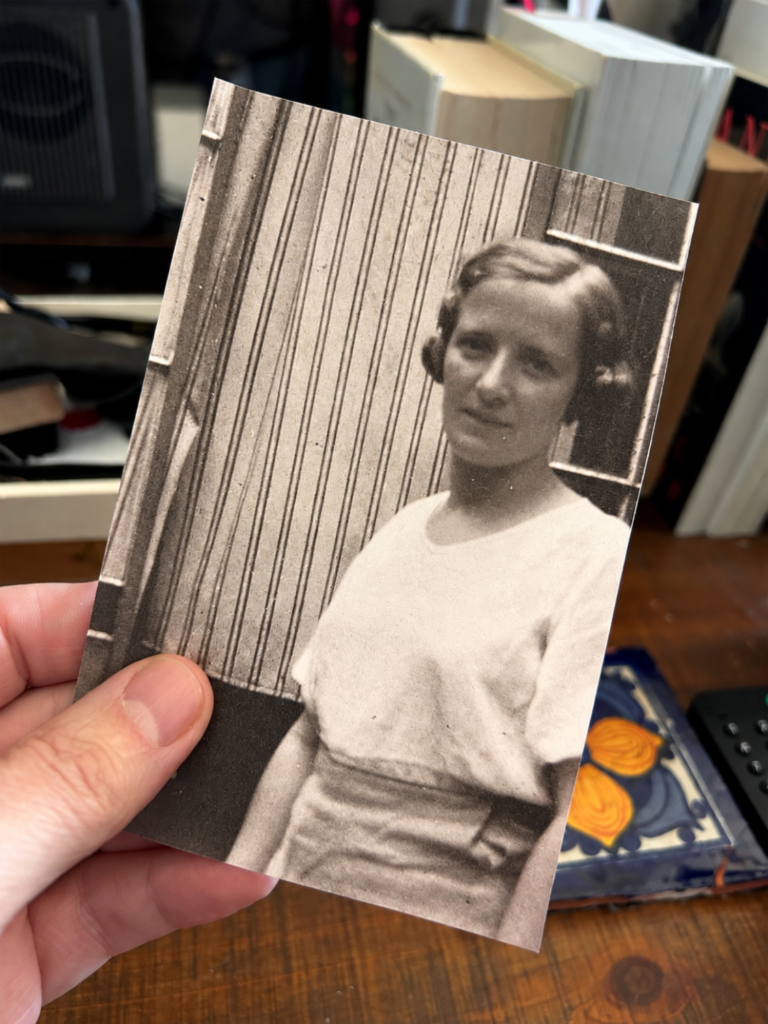
My grandmother Carmen Vásquez was born in the Galician aldea of Tosende in 1912. She left when she was ten, sailing to Colonia del Sacramento, a coastal town along el Río de la Plata, to join her father, Emilio, who had gone ahead some years earlier and found work there laying cobblestones for the city streets.
There is something almost too vivid in that image. The impoverished rural man from nineteenth-century Spain, newly arrived in the Americas, building streets stone by stone. A family line quite literally making the ground on which immigrant life could proceed.
Carmen met the man who would become her husband there: Manuel Alonso Palonga, or perhaps Balonga. I still need to settle the spelling, and perhaps the place too. He was from the nearby province of Lugo, eighteen years older than her, and a close friend of her father. Recently widowed, though we do not know the story of that first wife.
These gaps matter too. Family history is full of doors that will not open. You inherit the known and the missing together.
What we do know is that Manuel was considered very highly by my mother and by his wife. El pan de Dios, they called him. The bread of God. A man of apparently limitless patience. He was a confectionery baker with his own shop, and there are stories of him making those layered pillars of wedding cakes to order, only for them to collapse under their own weight. He did not curse or rage, apparently. He would pause, study the mistake, and begin again.
I cannot help seeing something in that.
A structure collapses. You look at where it failed. You begin again.
Maybe that is craft. Maybe temperament. Though I suspect it is also a form of survival.
There is another story, less piously serene, though appropriately humanising, about the time Manuel lost his temper with my father, Juan José—Pocho, as his friends called him—when he was still less than ten years old.
He had been petulant at the dinner table, refusing supper and complaining about the cleaning lady, who, as it turned out, had indeed been stealing Carmen’s jewellery in supposed secret. Manuel pulled Juan José by the ear and sent him to his room for such “honesty.”
That detail stays with me too. The child was right, but the truth was not welcome in that form. There is something there about families, about timing, about who is allowed to see what is real.
My father recently shared that, growing up as a young aspiring footballer, like so many boys, Manuel never once showed interest or came to even one of his matches.
I wonder now if some version of that absence travelled forward. Not as simple indifference or cruelty, necessarily. More as a consequence of what one generation could not metabolise, and therefore could not give.
Indeed, that may be one of the quiet themes underneath all of this.
Contrapunto castellano
Mi abuela Carmen Vásquez nació en la aldea gallega de Tosende, en 1912. Tenía diez años cuando cruzó el Atlántico hacia Colonia del Sacramento, junto al Río de la Plata, para reunirse con su padre, Emilio, que había llegado antes y trabajaba colocando adoquines en las calles de la ciudad.
Hay algo casi demasiado nítido en esa imagen. Un hombre pobre del mundo rural español, llegado a América, construyendo calles piedra por piedra. Una línea familiar haciendo, literalmente, el suelo sobre el que una vida inmigrante podía empezar a caminar.
Allí Carmen conoció a Manuel Alonso Palonga, o quizá Balonga. Todavía tengo que confirmar la grafía, y quizá también el lugar exacto. Era de Lugo, bastante mayor que ella, amigo cercano de su padre, y viudo reciente. De aquella primera esposa no sabemos casi nada.
También se heredan esas zonas cerradas. La historia familiar está llena de puertas que no se abren del todo. Uno recibe lo sabido y lo ausente al mismo tiempo.
Lo que sí sabemos es que Manuel era muy querido por mi madre y por Carmen. El pan de Dios, le decían. Un hombre de una paciencia casi ilimitada. Era pastelero, tenía su propio negocio, y hay historias de aquellas tortas de boda, altas y trabajadas, que preparaba por encargo sólo para verlas, a veces, venirse abajo por su propio peso. Al parecer no gritaba ni maldecía. Se detenía, miraba dónde había fallado la estructura, y volvía a empezar.
No puedo evitar ver algo en eso.
Una construcción se derrumba. Uno estudia el punto de quiebre. Y empieza de nuevo.
Quizá eso sea oficio. Quizá carácter. Aunque sospecho que también es una forma de supervivencia.
Hay otra historia, menos serenamente piadosa, aunque más humana, sobre la vez que Manuel perdió la paciencia con mi padre, Juan José —Pocho, como le decían sus amigos— cuando todavía no tenía diez años.
Mi padre se había puesto difícil en la mesa, negándose a cenar y quejándose de la mujer que ayudaba en la casa, quien, según parece, sí estaba robando a escondidas algunas joyas de Carmen. Manuel lo tomó de la oreja y lo mandó a su habitación por aquella “honestidad”.
Ese detalle también se me queda. El niño tenía razón, pero la verdad no fue bienvenida en esa forma. Hay algo allí sobre las familias, sobre el momento adecuado, sobre quién tiene permiso para ver lo real.
Mi padre me contó hace poco que, cuando era niño y soñaba con ser futbolista, como tantos, Manuel nunca mostró interés ni fue a verlo jugar un solo partido.
Me pregunto ahora si alguna versión de esa ausencia siguió viajando hacia adelante. No necesariamente como indiferencia o crueldad. Más bien como consecuencia de algo que una generación no supo metabolizar y, por lo tanto, tampoco pudo entregar.
Quizá ese sea uno de los temas silenciosos debajo de todo esto.
Que bonita historia. Mi abuela era desde La Mancha y se imigro a Mexico cuado era joven.
What a beautiful story.
Thank you for reading!
Historias familiares. Me gusta cómo las relatas y, al mismo tiempo, les das un toque de poesía.
Gracias, Álvaro. Lo aprecio. Esa sería exactamente mi intención.
Alright, this reminds me of my abuelo in Mexico almost exactly.
That’s nice to hear. I think cultural heritage has the ability to run parallel lines between people and generations.